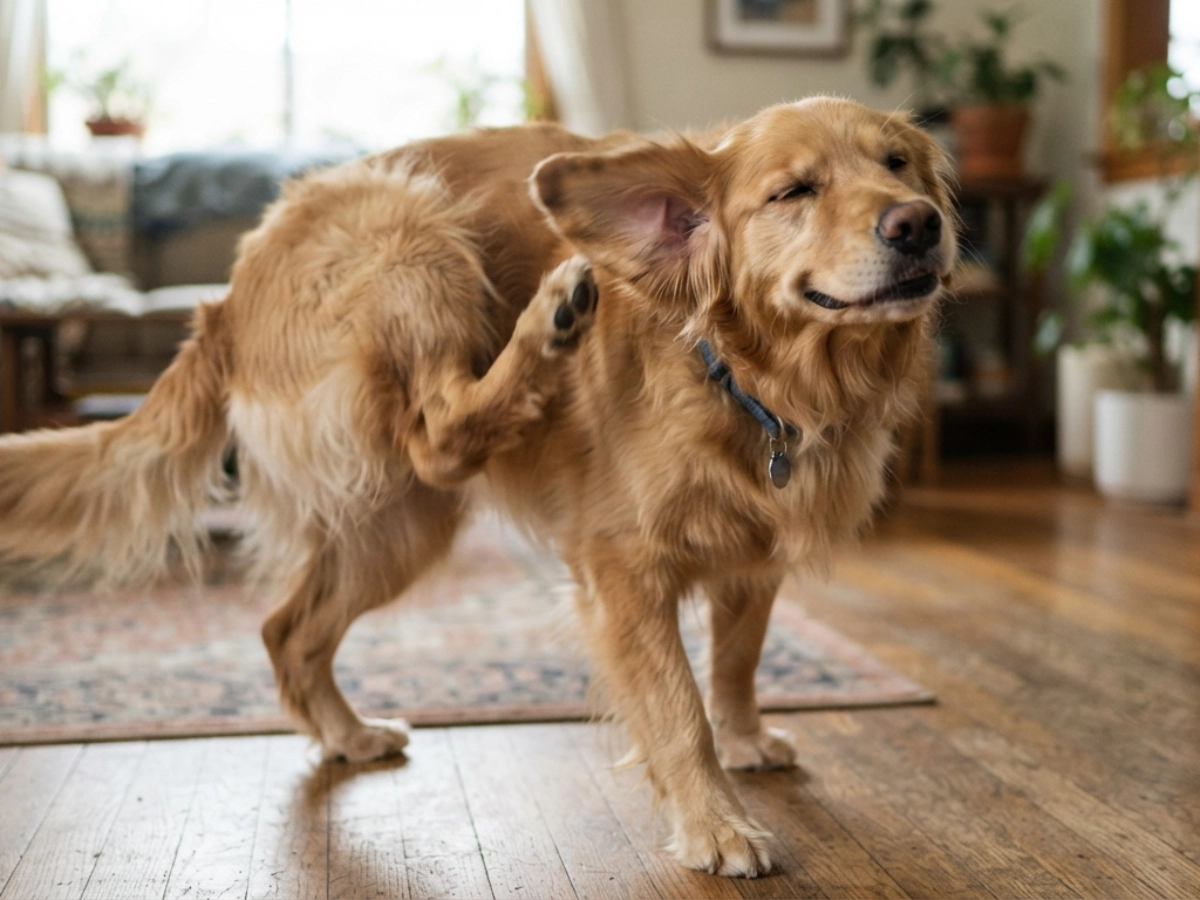

While compiling information on canine oral care, I stumbled upon a product that immediately piqued my interest: dog breath-freshening treats. After several days of research and consultation with veterinarians, I discovered that this product does more than merely mask bad breath with a minty scent; it actually tackles the issue at its source.
In this article, I will provide a detailed analysis of how these products work, what ingredients to look for, and our top recommendations for the best breath mints for dogs currently available on the market.
💡 Quick Summary:
Table of Contents
The short answer is: Yes, but only if they do more than just smell like mint.
Here is a common trap many dog owners fall into: buying treats labeled “mint-flavored,” assuming they work like human breath mints. In reality, simply masking stinky breath with a heavy fragrance does nothing to stop the underlying bacterial party happening in your dog’s mouth. To identify truly effective products and solutions, we must first understand the root causes of Bad Breath and key characteristics that a high-quality product should possess.
Bad breath in dogs stems from a variety of causes. Some cases result from a lack of proper daily oral hygiene, while others are triggered by underlying issues in other parts of the body—such as the kidneys or liver—that subsequently manifest as halitosis.
According to the pet oral health guidelines issued by the American Veterinary Dental College (AVDC), the most common misconception among pet owners facing canine bad breath is attempting to mask the odor with scented mint treats, while overlooking the underlying medical signals indicated by the smell.What does a truly effective dog breath-freshening product look like?
If you want to rescue your nostrils from rotten-egg canine breath, you must look for products engineered to attack the bacterial biofilm.
“Severe canine halitosis is often a clinical manifestation of periodontal disease—specifically, the rampant proliferation of bacteria beneath the gum line,” clinical veterinary experts have explicitly noted in relevant academic reports. “Relying solely on non-functional treats that lack therapeutic efficacy merely serves to mask the condition. This allows plaque and tartar buildup to continue worsening, ultimately leading to tooth loss, root abscesses, and even the systemic spread of bacteria via the bloodstream to the heart and kidneys.” Therefore, the most effective breath mints for dogs utilize natural, pet-safe antibacterial agents that neutralize odor compounds at the source rather than just overpowering the smell.
The effectiveness of any oral hygiene product hinges on its list of ingredients. When shopping around, you’ll find that the best breath mints for dogs always contain functional, scientifically validated ingredients that promote both oral and digestive health
Naturally active antibacterial ingredients effectively neutralize volatile sulfur compounds and reduce harmful bacteria within the oral cavity.
Healthy Fats & Binding Matrix
When selecting the best breath mints for dogs, prioritize those bearing VOHC (Veterinary Oral Health Council) certification whenever possible. This seal ensures the product is genuinely effective in reducing plaque and tartar.
Now that we’ve explored the underlying causes of canine halitosis and what to look for in a high-quality product, let’s get into the top recommendations. Whether you are looking for crunchy chews, soft bites, or water additives, here is our vetted list of the best breath mints for dogs available at PetSmart and Walmart.
This standout product is the closest thing on the market to the concept of a “doggy mint”—making it the perfect solution for instantly neutralizing even “bioweapon-grade” bad breath.
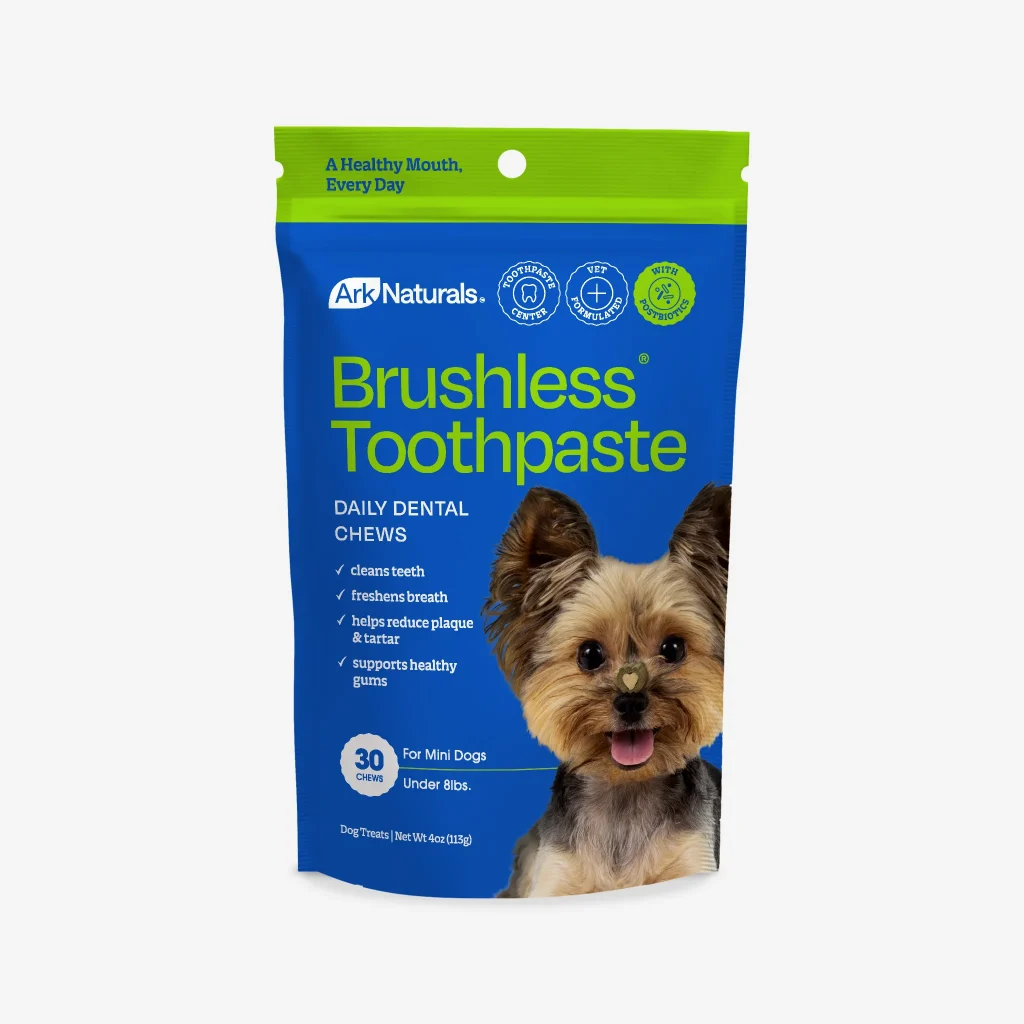
Core Features: A unique “crispy-on-the-outside, soft-on-the-inside” dual-layer design. The outer layer consists of a sturdy, crunchy shell that mechanically scrapes away plaque as the dog chews; the inner layer features a soft, “toothpaste-like” filling.
Breath-Freshening Ingredients: Plant chlorophyll, alfalfa, cinnamon, cloves, and natural spearmint.
| Pros | Cons |
| The herbal antibacterial ingredients are seriously hardcore. | The intense herbal scent of cloves and cinnamon might cause some picky dogs to simply take a sniff and walk away. |
| Cloves and cinnamon possess natural anti-inflammatory and antibacterial properties, providing immediate relief from bad breath. |
If you are looking for soft, mint-flavored dental treats or bones for dogs—particularly for senior dogs with dental sensitivities or for puppies—this is an excellent choice.
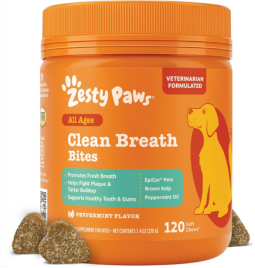
Key Features: The texture is more resilient and elastic than ordinary dental chews; it is easy to break apart and will not damage fragile teeth. Enriched with natural brown algae, which works systemically from within the body to prevent plaque from adhering to tooth enamel.
Freshening Ingredients: Brown algae, green tea extract, peppermint oil.
| Pros | Cons |
| Gentle and Easy to Digest: Grain-Free, Hypoallergenic Formula | The price is slightly higher than that of ordinary commercial brands, placing it in the high-end care category. |
| Peppermint oil can instantly make a dog’s breath fresh and cool. |
A classic favorite that consistently ranks among the top-selling products year-round at PetSmart and Walmart. Its greatest selling point—and the source of your confidence in purchasing it—is that it bears the official seal of approval from the Veterinary Oral Health Council (VOHC).
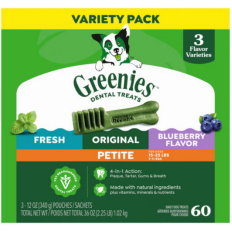
Key Function: Although it lacks an intense minty flavor, its exceptionally elastic physical structure allows dogs’ teeth to sink deep into the treat while chewing, effectively scrubbing away tartar beneath the gumline.
Freshening Ingredients: Apple pomace, Sodium Copper Chlorophyllin (a natural deodorizer).
| Pros | Cons |
| Proven through rigorous clinical trials to effectively reduce bad breath caused by dental conditions. | Contains wheat gluten; caution is advised for dogs with severe grain allergies. |
| It has excellent palatability—hardly any dog can resist it. |
Tropiclean Fresh Breath Water Additive
If your dog is the type to simply swallow treats whole, solid mints likely won’t do the trick. In such cases, this advanced alternative is highly recommended.
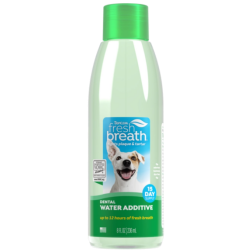
Core Function: Completely colorless, odorless, and fragrance-free. Simply pour one capful into your dog’s daily water bowl; as your dog drinks, the solution automatically coats the entire oral cavity, instantly breaking down the bacterial biofilms responsible for bad breath within both the water bowl and the mouth.
Breath-Freshening Ingredients: Green Tea Extract, Citric Acid, Cetylpyridinium Chloride (a safe, veterinary-grade antibacterial agent).
| Pros | Cons |
| Incredibly easy to use—a miracle breath-freshening solution with a 100% flawless track record across the entire web—especially ideal for cats and dogs that resist brushing their teeth. | It cannot provide physical abrasion; if your dog already has a thick buildup of tartar on its teeth, it should be used in conjunction with dental chews. |
If you like knowing exactly what goes into your pet’s stomach, enjoy making homemade dog food, or if your dog has a sensitive stomach and reacts poorly to commercial preservatives, then whipping up some natural, breath-freshening mints for dogs right in your own kitchen is the ultimate solution.
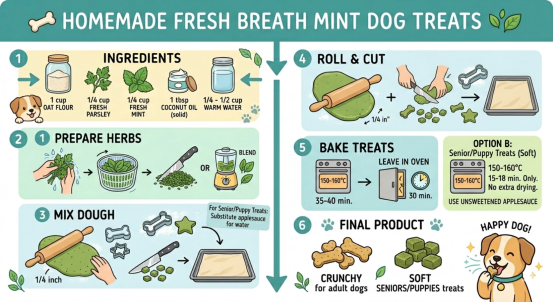
To make approximately 24 bite-sized mint treats, you will need the following:
Wash the fresh mint and parsley thoroughly, then pat them dry with paper towels. Pluck the leaves from the stems and chop them as finely as possible. If available, you may also place the herbs, melted coconut oil, and a small amount of water into a food processor and blend until the mixture forms a smooth, vibrant green paste.
Pour the oat flour and chopped herbs into a mixing bowl and stir to combine; then, add the coconut oil. Slowly add warm water—one tablespoon at a time—while continuously stirring until the mixture comes together to form a cohesive dough.
Preheat your oven to a temperature above 325°F. Line a baking sheet with parchment paper. On a lightly floured work surface, roll out the green dough to a thickness of approximately 1/4 inch. Use your favorite dog treat cookie cutters to shape the dough, or simply use a knife to cut it into small squares or pieces.
Place the shaped dough pieces into the oven and bake at a low temperature for 35–40 minutes, maintaining the heat between 302°Fand 325°F. Once the baking time is complete, crack the oven door open slightly and let the treats sit inside for another 30 minutes.
When I first started making these treats, my dog loved them; however, as he aged, I found that the dehydrated biscuits were too hard and brittle, causing his gums to bleed slightly. If you are making these for a senior dog or a puppy, you can easily adapt this recipe to create soft, minty dog treats instead.
Simply replace the water with an equal amount of unsweetened applesauce, reduce the baking time to 15–18 minutes, and skip the post-baking dehydration step. The result is a soft, chewy, cake-like green treat that offers the same breath-freshening benefits without putting any strain on fragile teeth! The soft version can be stored in the refrigerator for up to 5 days, or frozen to serve as a refreshing summer snack.
Now you have a fully healthy, cost-effective way to recreate the best breath mints for dogs at home!
No. Most human breath mints contain xylitol, which is highly toxic to dogs and may cause life-threatening hypoglycemia or liver failure.
Dog-specific breath mints formulated with pet-safe ingredients are generally safe when fed according to directions.
Quality dog breath mints can temporarily freshen breath, but they should never replace brushing or professional dental care.