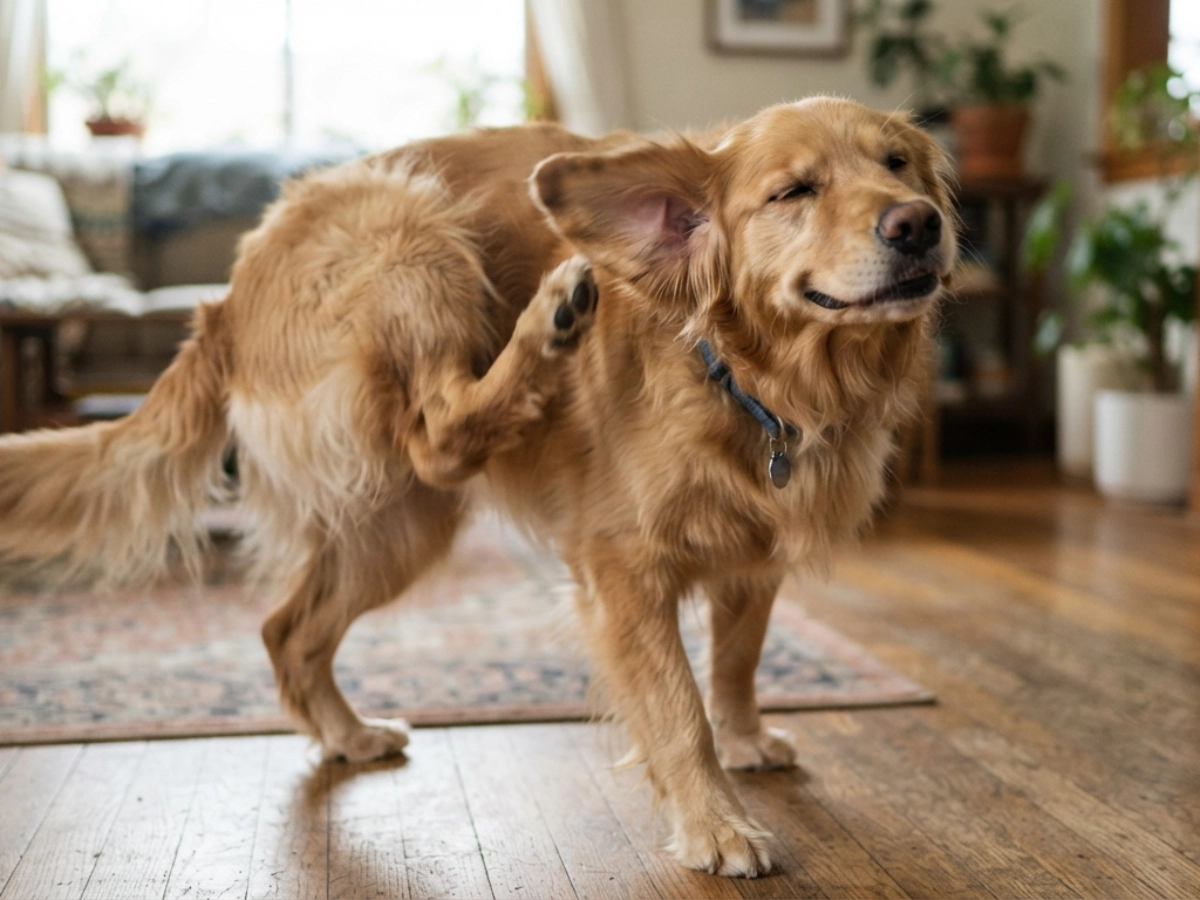

Does your dog suffer from bad breath? Unsure how to choose suitable dog breath fresheners? It can be a real buzzkill when you are enjoying a moment of close bonding with your dog, only to be suddenly hit by an unpleasant odor coming from their mouth. To ensure your dog’s oral health remains consistently sound and odor-free throughout the year, establishing a scientific and effective care regimen is absolutely essential.
AVDC Chair-Elect Dr. Susan Crowder noted:”It’s so important to keep up with your pet’s oral health exams and cleanings. Treating periodontal disease can have an immediate positive impact on your pet’s wellbeing and quality of life.”
—This article provides a comprehensive, one-stop guide—ranging from why dogs develop bad breath to how to choose a breath freshener.
Bad breath in dogs is primarily caused by food residue remaining in the mouth after eating; this residue combines with bacteria to form a layer of plaque on the teeth’s surface. However, it is particularly important to note that if your dog’s breath has a pungent, ammonia-like odor, it may indicate an underlying kidney issue that requires immediate veterinary attention.
Without a consistent routine of daily oral care, the following issues may arise:
Therefore, establishing a habit of daily home care is paramount. Finding a suitable breath-freshening product for dogs to actively support their daily oral hygiene is a matter that cannot be delayed.
Today’s market is flooded with a dizzying array of products of varying quality, making it difficult to know how to choose. To find a dog breath freshener that is both suitable and safe, be sure to follow the selection guidelines below.
| Element | reason |
| Enzyme | Look for products containing glucose oxidase or lactoperoxidase; these enzymes effectively break down bacterial biofilms and prevent plaque from hardening. |
| Zinc | Zinc can bind with volatile sulfides, effectively reducing bad breath. |
| Green Tea Extract | An excellent antioxidant capable of inhibiting bacterial growth. |
| To Avoid: Xylitol | Even a small amount of xylitol is a deadly poison for dogs. It can cause a rapid drop in their blood sugar levels, triggering liver failure. |
Specialized Drinking Water Additive and breath drops for Dogs:
If your dog strongly resists having its teeth brushed, this product offers a simple solution: simply add a few drops to your dog’s drinking water. This ensures that with every sip, bacteria are effectively inhibited.
Many dog owners wonder how a simple liquid can actually clean teeth; allow me to explain. Popular products on the market—such as TropiClean’s dog breath freshener—utilize a blend of zinc gluconate, cetylpyridinium chloride, and natural green tea extract. These ingredients work by altering the pH level within the oral cavity and neutralizing sulfur compounds, thereby effectively improving the overall oral environment.
Dog Food-Additive Breath Fresheners:
With this type of product, you simply need to add it to your dog’s food. Once absorbed into the bloodstream, the natural ingredients within it are secreted into the oral cavity via saliva, thereby helping to soften tartar and prevent the formation of dental plaque.
Breath-Freshening Chews for Dogs:
If your dog is a real “little foodie,” this product makes for the perfect treat choice; not only does it reward your canine companion, but the physical friction it generates also helps remove dental plaque.If your dog is a bit of a foodie, this product makes for an excellent treat choice. Not only does it provide your dog with a tasty reward, but the physical friction generated during chewing also helps remove dental plaque.
Breath-Freshening Spray for Dogs:
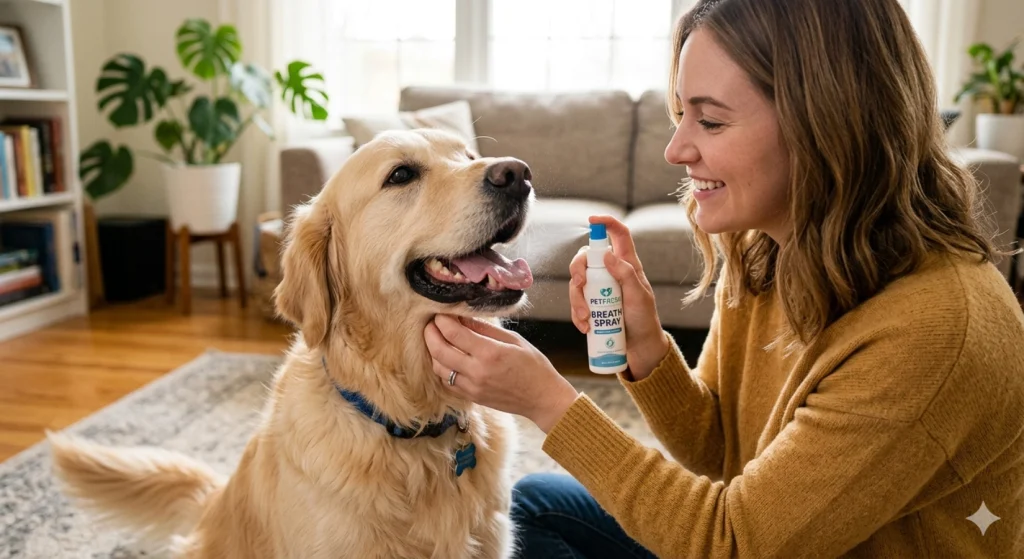
If your dog is cooperative and doesn’t mind you touching its mouth, you can simply spray this product directly onto its teeth. This method offers the fastest and most effective way to inhibit bacterial growth.
Finally, when selecting a product, please look for one bearing the VOHC (Veterinary Oral Health Council) seal of approval. This ensures that the product has undergone rigorous testing and has been proven to reduce dental plaque and tartar by at least 15% to 20%.
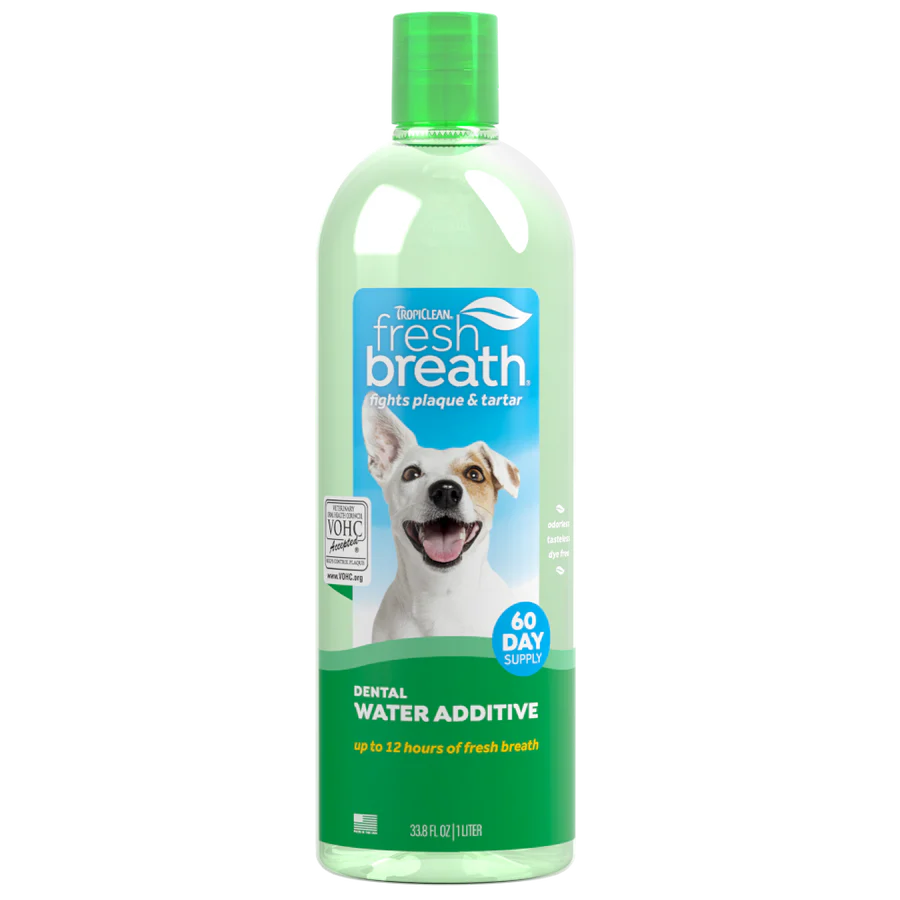
As a long-standing leader in the pet dental care industry, this water additive is the ultimate savior for busy pet parents.
| Pros | Cons |
| Authoritative Backing: Carries the prestigious VOHC Seal of Acceptance, clinically proving its ability to combat plaque. | Although marketed as odorless, some specialized formulas carry a very faint natural herbal scent that a tiny percentage of highly sensitive dogs might initially notice. |
| Multi-Action Formula: Packed with zinc ions and green tea extract, it not only controls foul odor for up to 12 hours but also actively disrupts the plaque formation chain. | |
| Targeted Varieties: Offers specialized formulas fortified for hip and joint health, digestive support, or skin and coat care. |
Best For: Dogs that completely resist physical brushing, where owners need to see a noticeable improvement in halitosis within 2 weeks.
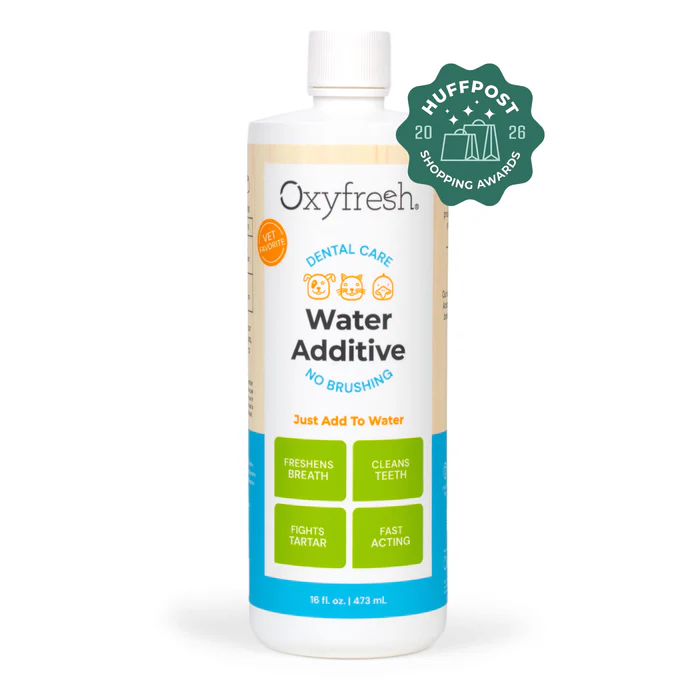
Oxyfresh utilizes a completely “stealth, high-tech” approach and has earned an outstanding reputation among veterinarians for its scent-free technology.
| Pros | Cons |
| Patented Tech: Utilizes Oxygene® (Stabilized Chlorine Dioxide), which doesn’t just “mask” bad breath with heavy mint artificial fragrances; it oxidizes and eliminates Volatile Sulfur Compounds (VSCs) at the molecular level. | Despite its exceptional clinical track record and widespread use in premier North American animal hospitals, the brand has not officially applied for the VOHC seal. |
| True Zero-Scent Experience: 100% completely colorless, tasteless, and odorless. Once mixed into a water bowl, it is indistinguishable from pure water, perfectly bypassing a dog’s highly sensitive olfactory senses. | |
Best For: Extremely finicky or suspicious dogs that reject water if it has even a hint of added flavor or herbal extract.
This revolutionary product completely flips traditional dental care by working systemically from the “inside out,” utilizing a specific organic kelp harvested from the pristine waters of the North Atlantic.
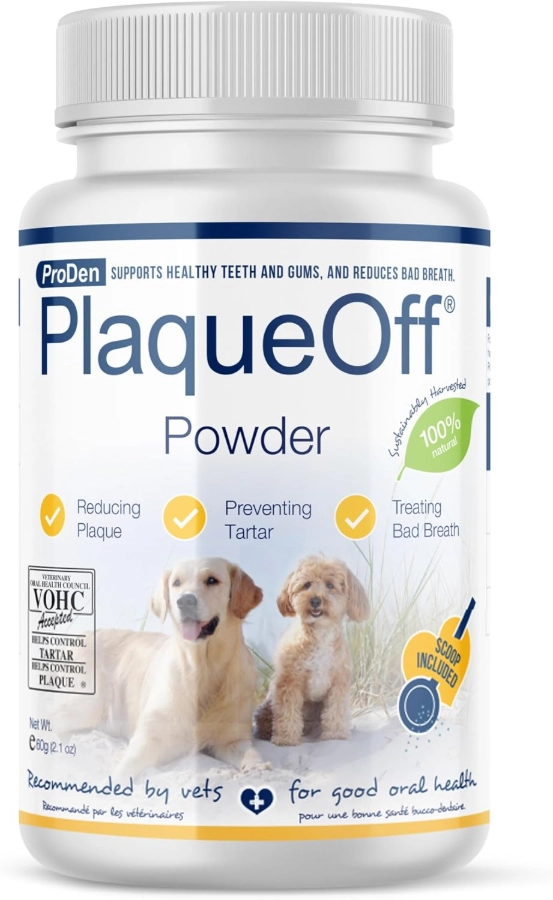
| Pros | Cons |
| Unique Mechanism: Once ingested with food, its active compounds are absorbed into the bloodstream and secreted via the salivary glands, altering the composition of the saliva to naturally soften hard, stubborn tartar over time so it flakes off during chewing. | Because it is made from natural sea kelp, it is naturally high in iodine. Therefore, it must absolutely not be given to dogs suffering from hyperthyroidism or related thyroid conditions. |
| VOHC Certified: Clinically proven and certified to reduce both plaque and tartar buildup. | |
Best For: Dogs that already have visible yellow, hardened tartar crusts on their molars, or pets that prefer dry kibble over drinking water.
If water additives represent chemical intervention, Greenies stands as the gold standard for mechanical, physical plaque scraping.
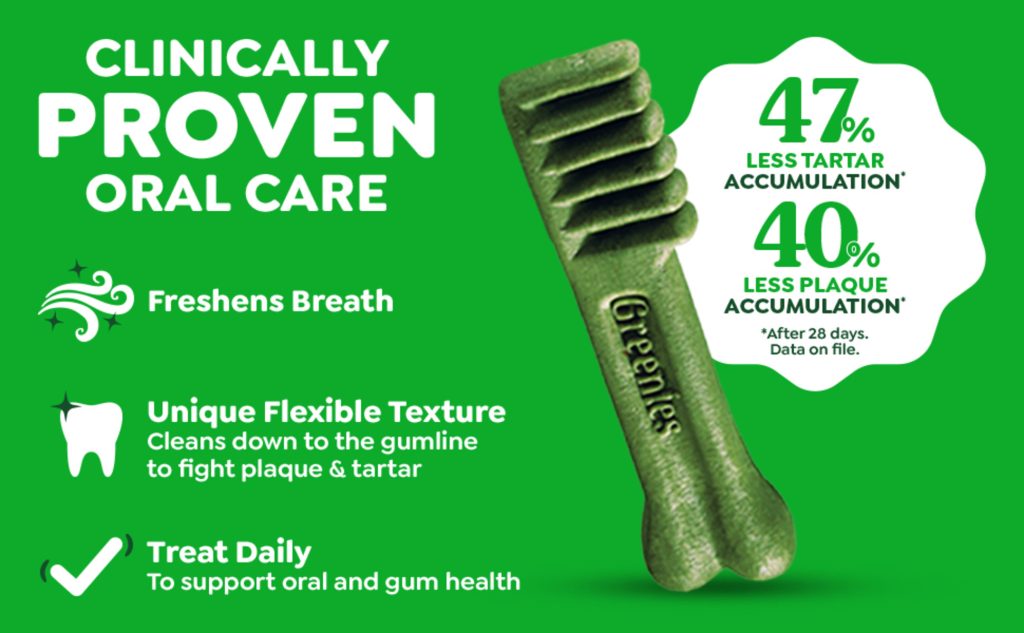
| Pros | Cons |
| Engineered Physical Design: Its unique “toothbrush-shaped” grooves perfectly match the natural anatomy of a canine’s jaw, allowing it to hug and scrape the teeth down to the gumline as the dog chews. | Contains a noticeable caloric values. For dogs requiring strict weight management, or those with a history of obesity or pancreatitis, daily food intake must be carefully adjusted. Additionally, if your dog is a “gulper” rather than a thorough chewer, the dental benefits are vastly reduced. |
| High Palatability & VOHC Seal: Extremely delicious to almost all dog breeds, allowing pet parents to combine reward training with vital daily dental care. | |
Best For: Teething puppies or high-energy dogs where owners want to kill two birds with one stone: burning energy with a treat while cleaning teeth physically.
While exploring the Best Breath Mints for Dogs is the quickest way to tackle severe canine halitosis, homemade alternatives are a fantastic backup. If you enjoy DIY projects—or if purchasing ready-made products is simply inconvenient in your area—here is a guide to making your own natural breath fresheners for your dog at home.”
These natural ingredients are the ideal choices for making your own homemade dog breath freshener.
Ingredients: Approximately 120 ml of freshly pressed coconut oil + 2 tablespoons of chopped fresh flat-leaf + 5–6 fresh mint leaves.
Note: When preparing this, please be sure to use curly-leaf parsley. You must strictly avoid using Spring Parsley or English Mint, as these varieties are highly toxic to dogs!
Production Flowchart

Feeding Dosage Chart
| Dog Weight | Recommended Daily Dosage | Frequency |
| Small Dogs (under 4.5 kg) | 1/4 to 1/2 teaspoon | Every other day |
| Medium-sized Dogs (5-18kg) | 1 teaspoon | Once daily |
| Large Dogs (over 18 kg) | 1 to 2 teaspoons | Once daily |
Friendly Reminder: If your dog has a history of pancreatitis, obesity, or hyperlipidemia, please do not feed them these homemade treats, as coconut oil contains a high concentration of fat.
While an at-home daily care routine is absolutely indispensable and forms your first line of defense against periodontal disease, it can never entirely replace an annual professional dental cleaning and oral exam by a licensed veterinarian. Only animal hospitals can perform comprehensive digital dental X-rays and deep subgingival (under the gumline) cleanings. Combining consistent at-home hygiene with professional annual checkups is the only bulletproof way to guarantee your dog’s lifelong oral health.
This article is for informational and educational purposes only and does not constitute professional veterinary advice, diagnosis, or treatment.
Q1: Can dog breath fresheners be used daily?
A: Yes. Provided that the product you choose is alcohol-free, non-toxic, and has passed safety testing—specifically excluding xylitol or artificial sweeteners—it can be used daily according to the dosage recommended in the instructions.
Q2: Can I use human mouthwash or toothpaste directly on my dog?
A: Absolutely not! Human dental products contain ingredients that are highly toxic to dogs—such as fluoride, xylitol, and the foaming agent sodium lauryl sulfate (SLS). Misuse can lead to acute poisoning in dogs and even pose a life-threatening risk.
Q3: How often should I check my dog’s teeth for plaque?
A: It is recommended that you inspect their mouth at least once a week. Pay close attention to signs of gum redness, the presence of yellow or brown tartar buildup on the teeth, or the sudden onset of an unpleasant odor from the mouth.