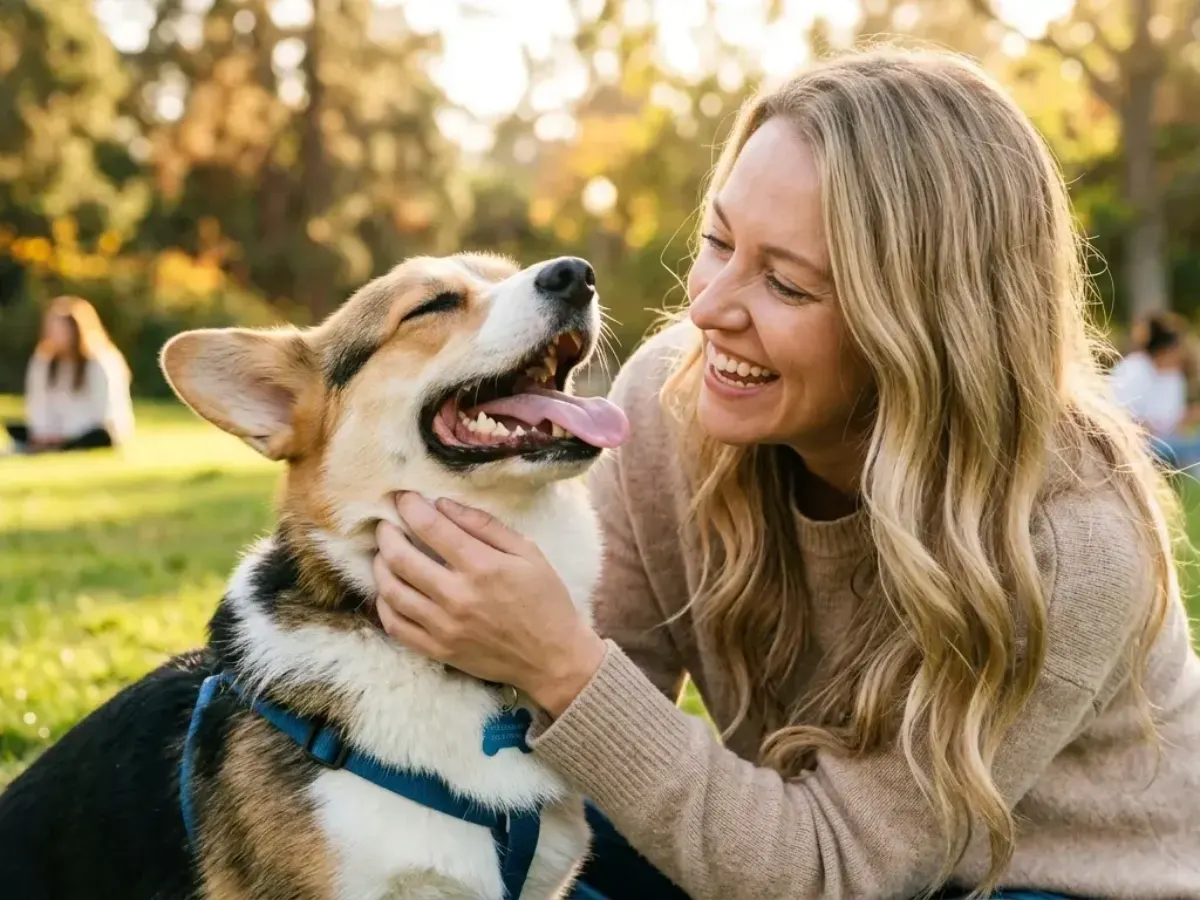
Reversible Stage: Canine gingivitis is 100% preventable and fully curable if caught early.
Core Signs: Watch for bad doggy breath, swollen red gums, bleeding, and chewing difficulties.
Expert Care: Combines professional vet cleanings under anesthesia with daily at-home toothbrushing.
Myth Busting: Exposes dangerous Reddit natural remedies like baking soda, antlers, and coconut oil.
Gingivitis in dogs refers to the early, reversible inflammation of the gum tissue (gingiva). It triggers when microscopic food debris and bacteria proliferate near the gumline. This debris and bacteria form a sticky film called plaque, which eventually calcifies into hard tartar. If left untreated, this localized bacterial infection will cause the gums to separate from the teeth, creating periodontal pockets. This ultimately advances to severe, irreversible periodontal disease and permanent tooth loss.
The good news is that unlike advanced periodontal disease, canine gingivitis is 100% preventable and fully curable if caught early. The bad news is that its early signs are often easily overlooked by pet parents.
Below, we will break down the exact symptoms of canine gingivitis, explain how to separate safe home-care habits from dangerous internet myths, and outline the concrete steps you can take today to ensure your beloved dog enjoys a pain-free, bright, and healthy smile for life.
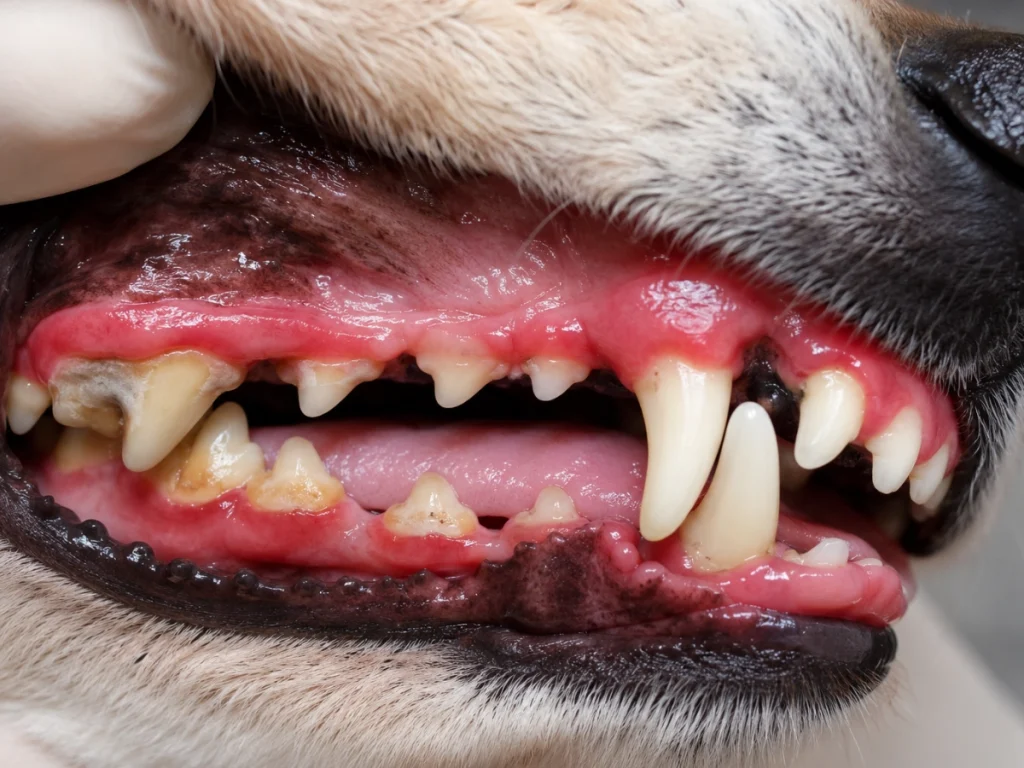
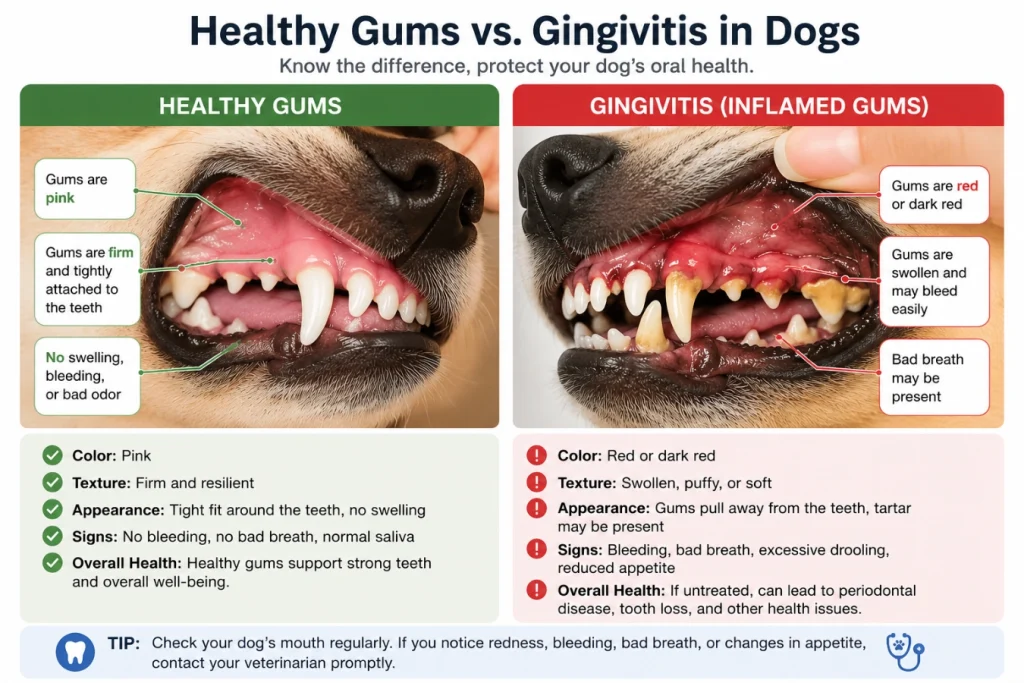
Red and Swollen Gums: Healthy gums are a vibrant coral pink. When inflamed, the free gingiva and interdental papillae turn bright red or dark red, and the edges become edematous and puffy.
Bleeding on Contact: This is the most prominent indicator of gingivitis. A dog’s gums will bleed very easily during brushing, eating, chewing on toys, or during a veterinary probing examination.
Plaque and Tartar Mapping: This most commonly targets the dog’s upper back teeth (primarily the premolars and molars). If you notice a yellow, brown, or gray calcified crust (tartar) on the teeth paired with a thin red line along the gumline, your dog likely has active gingivitis.
Behavioral & Daily Performance Changes
Excessive Drooling: A sudden change in drooling patterns, or finding damp spots on your pet’s favorite bed, can indicate localized oral irritation.
Loss of Appetite: A sudden reluctance to eat or a complete loss of interest in hard dental chews is a major warning sign that oral inflammation is worsening.
Difficulty Eating: Observe how your dog approaches their food bowl. If they hesitate before chewing, drop hard kibble pieces out of their mouth, or suddenly chew exclusively on one side, their gums are likely highly sensitive.
Pawing at the Mouth: If your dog frequently rubs their face against the carpet or paws at their mouth, they are attempting to relieve oral pressure and discomfort, and they will likely resist having their mouth touched.
Clinical Expert Benchmarks
According to the companion animal dental frameworks established by organizations like the Veterinary Oral Health Council (VOHC), identifying these early visual and behavioral cues is the absolute foundation of proactive preventative care. Catching and treating the condition at this stage ensures your dog avoids chronic, systemic pain and halts the disease before it progresses to irreversible structural damage.
From Plaque to Periodontal Disease: Causes and Stages
The Root Cause of Canine Gingivitis
Understanding the enemy is the first step in protecting your fur baby’s smile. The biological process of canine gingivitis begins at a microscopic level and develops rapidly if left unchecked. Inside a dog’s mouth, a continuous cycle takes place.
Pellicle Formation: Immediately after a dog eats, glycoproteins in the saliva attach to the tooth surfaces, forming a sterile, thin film called the acquired pellicle.
Bacterial Colonization & Clustering: Native oral bacteria (initially mostly Gram-positive aerobic bacteria) adhere to this film and begin to multiply rapidly.
Biofilm Shield: The bacteria secrete an extracellular matrix, encasing themselves to form a plaque biofilm. This “protective shield” resists being washed away by saliva and is the primary instigator of gum inflammation.
Turning to Stone: Tartar Catalyzation (Begins Within 48 Hours)
Mineral Deposition: If the plaque is not removed via brushing within 24 to 48 hours, minerals like calcium and phosphorus in the dog’s saliva deposit into the plaque.
Rough Surfaces: The plaque quickly hardens and transforms into calculus (tartar).
The Vicious Cycle: While tartar itself does not directly trigger inflammation, its surface is incredibly rough. This acts as countless microscopic “fortresses” that attract even more plaque, making the underlying bacteria significantly harder to remove.
Structural and Environmental Accelerators
While bacteria are the root cause, the following factors significantly accelerate the progression of gingivitis:
Breed and Anatomy: Toy and brachycephalic (short-nosed) breeds (e.g., Toy Poodles, Pomeranians, Pugs) have severely crowded teeth. This traps food debris easily, causing their disease incidence and acceleration rates to be drastically higher than those of large dogs.
Dietary Consistency: Long-term feeding of soft foods, canned wet food, or sticky treats lacks the physical friction and mechanical scraping provided by hard food, accelerating plaque accumulation.
Lack of Daily Care: A complete absence of at-home toothbrushing allows plaque to convert into tartar completely unhindered.
Summary:Plaque is the spark, tartar is the firewood, and gingivitis is the flame. By breaking up the accumulation of plaque, you fundamentally cut off gingivitis at its source.
The Four Stages of Periodontal Disease
Periodontal Stage
Core Symptoms
Bone Loss Rate
Reversibility
Required Action
Stage 1: Gingivitis
Red, swollen gums; bad breath
0%
100% Reversible
Professional dental cleaning and daily home care
Stage 2: Early Periodontitis
Bleeding gums; early periodontal pockets
Up to 25%
Irreversible (but manageable)
Deep scaling, root planing, and strict maintenance
Early intervention is paramount, a fact supported by rigorous clinical data. According to veterinary standards outlined in the Canine and Feline Dental Care Guidelines published by the American Animal Hospital Association (AAHA), over 80% of dogs show distinct clinical signs of periodontal disease by the age of 3. [AAHA 2026 Guidelines] This staggering statistic highlights that chronic oral infections are not isolated incidents but a widespread epidemic among modern pets, making proactive oral health assessments a vital responsibility for every pet parent.
How to Treat Canine Gingivitis (Professional Veterinary Treatment)
Professional veterinary intervention is the absolute core of treatment. Because the vast quantities of bacteria triggering the inflammation are hidden beneath the gumline (invisible to the naked eye), home brushing or dental chews alone cannot eradicate them.
1. Comprehensive Oral Assessment
A professional veterinary technician will thoroughly inspect the dog’s entire oral cavity, assessing the mobility and fracture status of each tooth, alongside measuring periodontal pocket depths.
Pre-anesthetic bloodwork and physical evaluations are performed to evaluate anesthesia risks and tailor a personalized anesthetic protocol.
Intraoral Dental Radiographs: Just like human dentists, veterinary professionals utilize digital X-rays to see what is happening underneath the gumline. This is critical for identifying hidden root decay, jawbone loss, or asymptomatic abscesses that look completely healthy from the outside.
2. Professional Treatment Procedures
Supra-gingival Ultrasonic Scaling: Using specialized ultrasonic equipment to shatter and remove hardened tartar from the crown (the visible part) of the teeth.
Sub-gingival Scaling (The Most Critical Step): Using delicate curettes to go deep inside the gingival sulcus, completely eliminating the plaque and toxins hiding below the gumline.
Polishing: Scaling leaves microscopic scratches on the tooth enamel, which actually makes it easier for bacteria to adhere later. Using a prophy paste and a professional polishing cup smoothes out the enamel, delaying future plaque aggregation.
Localized Anti-inflammatory Medication: If localized gum inflammation is severe, the vet may apply a long-acting antibiotic gel directly into the subgingival pocket after flushing to accelerate tissue healing.
The Anesthesia Discussion
On platforms like Reddit’s canine gingivitis forums, one of the single greatest anxieties expressed by pet parents is the fear of general anesthesia. Feeling anxious is completely normal. However, when asking how to treat canine gingivitis, anesthesia is a non-negotiable safety measure required for a proper clinical cleaning.
Here is why “Anesthesia-Free” or purely cosmetic dental scaling is heavily discouraged:
Zero Sub-gingival Cleaning: A conscious dog will never allow a vet to scrape deep inside their inflamed gums with sharp instruments. Cosmetic scaling only scrapes off the visible stains on the crown, leaving 100% of the disease-causing bacteria beneath the gumline untouched.
High Risk of Injury: Dogs naturally move and wiggle. A sudden, sharp jerk can cause razor-sharp dental tools to lacerate the tongue or slash open sensitive, swollen gums.
Extreme Stress and Fear: Forcing a dog to remain perfectly still while fingers scrape inside their painful mouth causes immense psychological trauma and shatters the bond of trust between the pet and humans.
During a legitimate, professional procedure, modern anesthesia is exceptionally safe. To protect your dog from inhaling aerosolized bacteria, vets secure the airway with an endotracheal tube, provide tailored pain management, and ensure a dedicated veterinary team continuously monitors them using specialized vital sign equipment.
The American Veterinary Medical Association (AVMA) strongly opposes anesthesia-free cosmetic dental procedures in its official position statements. [AVMA Position on Companion Animal Dental Procedures] They note that scraping teeth without full sedation is purely aesthetic, fails to treat subgingival disease, and exposes the patient to unnecessary risks of oral trauma.
Gingivitis Treatment Cost Breakdown
Cost Item
Estimated Amount
Purpose / Function
Pre-op Bloodwork
$50 – $150
Ensures normal liver and kidney functions to safely metabolize anesthetic drugs, minimizing surgical risk.
Anesthesia & Vital Monitoring
$100 – $300
Includes anesthetic agents, endotracheal intubation, and a dedicated technician monitoring heart rate, blood pressure, oxygen saturation, etc.
Ultrasonic Scaling & Polishing
$100 – $250
Uses professional equipment to remove plaque/tartar above and below the gumline, smoothing the tooth surface to delay future buildup.
Dental X-Rays
$50 – $200
Inspects the tooth roots and areas beneath the gumline to prevent missing deep, hidden dental pathologies.
Additional Fee: Extractions (Per Tooth)
$20 – $200
Varies depending on tooth size, location, and surgical difficulty (e.g., if sectioning or suturing is required).
Data Sources: CareCredit & PetMD Survey References, AVMA Annual Reports.
Note: The above data is for reference only; specific amounts fluctuate depending on regional operating costs, facility scale, and case complexity. Board-certified veterinary dentists will charge more than general practitioners but offer highly specialized care for complex cases.
How to Treat and Prevent Canine Gingivitis at Home
At-home care is only effective against uncalcified plaque and mild gingivitis. If your dog already has obvious yellowish-brown, rock-hard tartar, they must receive an ultrasonic cleaning at a veterinary hospital first before transitioning to this home maintenance routine.
Prevention Protocol
Tier 1: Daily Toothbrushing (The Irreplaceable Gold Standard)
Physical brushing is the most effective and thorough method to remove plaque; no dental chew can replace it.
Use Proper Tools: You must use pet-specific toothpaste. (Meat-flavored enzymatic toothpastes are great; never use human toothpaste, as the fluoride and xylitol inside are highly toxic to dogs). For brushes, opt for soft-bristled pet toothbrushes, finger brushes, or even medical gauze wrapped around your finger for small dogs.
Frequency Requirements: At least once a day. Plaque forms constantly; intermittent brushing (like once a week) cannot stop it from converting into tartar.
Brushing Technique: Angle the bristles at 45 degrees toward the junction of the teeth and gums (the gingival sulcus), making gentle circular motions. Focus heavily on the outside of the upper back molars, where plaque builds up the fastest.
Tier 2: VOHC-Approved Dental Aids (The Gold Companion to Brushing)
For dogs where daily brushing is difficult, combine your efforts with products clinically certified by the Veterinary Oral Health Council (VOHC):
Dental Chews / Bones: Look for products displaying the official VOHC seal. As the dog chews for several minutes, the mechanical friction physically scrapes away plaque from the tooth surfaces.
Dental Prescription Diets: These kibbles are typically larger with a specialized matrix texture. Instead of shattering instantly, they engulf and wipe the tooth surface as the dog bites down, mimicking a toothbrush.
Tier 3: Chemical & Water Management (The Final Line of Defense)
Oral Probiotics: Adding pet-specific oral probiotics to food helps balance the oral microbiome, suppressing the growth of harmful bacteria that cause periodontal disease.
Pet Mouthwash / dog Water Additives: Specific enzyme-containingdog water additives inhibit bacterial growth in the oral cavity, slowing down plaque formation and directly aiding bad breath management.
Home Treatment Protocol
If your dog exhibits very mild, early-stage gingivitis, you can apply these temporary at-home remedies:
Apply Pet-Specific Antimicrobial Sprays: Purchase a pet oral spray or gel containing Chlorhexidine. Apply it directly to the reddened gums 1–2 times a day to suppress oral bacteria and soothe inflammation.
Warm Saline Wipes: Dip a medical cotton swab in warm salt water and gently wipe the red, swollen gums to act as an emergency antiseptic and anti-inflammatory measure.
Temporary Soft Diet: Chewing hard kibble during a flare-up exacerbates gum pain. It is recommended to soften their kibble with warm water or feed a veterinary prescription canned wet food to reduce mechanical friction on the gums.
Can You Treat Canine Gingivitis at Home Naturally? (Debunking Reddit Myths)
While the desire to use natural remedies is completely understandable, drawing a line between safe preventative care and dangerous online rumors is critical.
Myth 1: Brushing with Baking Soda or Homemade Herbal Toothpaste Cleans Inflammation
The Reddit Claim: Mixing baking soda with water, or blending mint and coconut oil to make a DIY toothpaste, saves money and acts as an anti-inflammatory antiseptic.
The Vet Reality: This is highly dangerous. Baking soda (sodium bicarbonate) is highly alkaline. Because dogs inevitably swallow toothpaste during brushing, baking soda entering the stomach severely disrupts gastric acid balance, triggering severe gastrointestinal distress or even metabolic alkalosis. Furthermore, concentrated mint essential oils commonly used by humans can be toxic to a dog’s liver and kidneys.
The Science: You must use an enzymatic pet toothpaste (containing glucose oxidase, lysozyme, etc.). Their formulas are safely designed to be swallowed and leverage biological enzymes to safely inhibit anaerobic bacteria.
Myth 2: Applying Coconut Oil or Aloe Vera Gel Naturally Cures Inflammation
The Reddit Claim: Coconut oil contains lauric acid which is antimicrobial, and aloe vera gel is soothing. Applying them directly to inflamed gums will heal them.
The Vet Reality: This treats the symptoms, not the root cause, and introduces poisoning risks. While coconut oil possesses mild antimicrobial and lubricating properties, it cannot break up or strip away the plaque biofilm already cemented to the teeth. More seriously, standard over-the-counter plant aloe vera gels often contain aloin, which causes severe diarrhea, vomiting, and dehydration if ingested by dogs.
The Science: If localized anti-inflammatory action is required, use a mucoadhesive chlorhexidine gel designed for pet oral use under a vet’s guidance. Its antibacterial efficacy against gingivitis is strictly backed by clinical medical trials.
Myth 3: Feeding Raw Meaty Bones or Deer Antlers Scrapes Away Tartar and Gingivitis
The Reddit Claim: Wolves in the wild don’t get dental cleanings. Giving dogs raw meaty bones, turkey necks, or hard deer antlers uses natural friction to grind away gingivitis.
The Vet Reality: This is essentially “robbing Peter to pay Paul”. Hard raw bones and antlers can indeed fracture off large chunks of tartar, but they frequently cause catastrophic tooth fractures (especially of the maxillary fourth premolar), exposing the pulp and leading to root necrosis. Additionally, raw bones carry harmful pathogens (like Salmonella and E. coli); for a dog with active gum inflammation and damaged mucosal barriers, these bacteria can easily enter the bloodstream.
The Science: Choose resilient dental chews or flexible dental bones that have been certified by the VOHC and possess an appropriate yielding texture.
If your dog already has yellowish-brown hardened calculus, or if their gums bleed upon contact, attempting home remedies or internet folklore only delays proper care, forcing your dog to silently endure chronic, systemic pain. At this point, a professional Comprehensive Oral Health Assessment and Treatment (COHAT) under general anesthesia is mandatory. Blindly trusting home remedies frequently turns a reversible case of gingivitis—which could be fully cured for a minor cost—into irreversible periodontal disease requiring full-mouth extractions.
Frequently Asked Questions
Q: How long can a dog live with gingivitis?▼
A: Dogs can live a normal lifespan with the condition initially, as the inflammation itself is not immediately fatal. However, if left untreated, it inevitably deteriorates into advanced periodontitis. Over time, chronic bacterial infections and massive plaque/tartar reservoirs breach localized tissue barriers, allowing harmful bacteria to enter the bloodstream. This systemic bacterial drift causes chronic inflammatory damage to vital organs—specifically the heart, kidneys, and liver—significantly reducing your pet’s overall health, daily comfort, and ultimate longevity.
Q: Can dog gingivitis be completely cured?▼
A: Yes, canine gingivitis is 100% completely curable and reversible. Because gingivitis is merely Stage 1 of periodontal disease, the inflammation is entirely limited to the superficial layers of the gum tissue, meaning no structural bone loss has occurred yet.
Disclaimer
This article is for informational and educational purposes only and does not constitute professional medical advice for your pet. For accurate diagnoses, customized dental plans, or when dealing with severe symptoms of canine gingivitis, always consult a qualified veterinarian or veterinary dental specialist. Never ignore or delay professional medical care due to information read online.
Related articles
The Ultimate Guide to Long-Haired Dachshunds: Everything You Need to Know—From Getting One to Canine Health
11 Natural Remedies for Dog Bad Breath: Vet-Approved Home Fixes
Discover 11 safe, natural remedies for dog bad breath you can try at home. Learn what causes canine halitosis and when to see a vet. Read our expert guide!